What she found inside that folder made her call my husband and whisper five words that shattered the entire room.
“She lied to you about this.”
I stood frozen near the bedroom doorway while my mother-in-law clutched my medical records like she had uncovered proof of some terrible crime.
For a few seconds, nobody moved.
Not me.
Not her.
Not even Eric.
The late afternoon sunlight stretched across the carpet while dust floated quietly through the air like the house itself had stopped breathing.
Then anger slammed into me so hard my hands shook.
“Put that down.”
Diane didn’t even blink.
If anything… she looked satisfied.
Victorious.
Like she had finally uncovered the evidence she’d been searching for since the day she moved into our house four weeks earlier.
Eric rushed upstairs moments later after her dramatic phone call, breathing hard.
“What’s happening?”
Diane turned toward him slowly, gripping the folder tighter.
“She can’t have children.”
The silence afterward felt unbearable.
Heavy.
Sharp.
Ugly.
I looked directly at Eric.
Not because the words shocked me.
But because his mother had just turned the most painful part of my life into a weapon without hesitation.
Three years earlier, after endless pain, surgeries, blood tests, and failed treatments, doctors diagnosed me with severe endometriosis.
Eric knew every detail.
Every hospital visit.
Every injection.
Every night I cried quietly beside him thinking my body had failed me.
He held my hand through all of it.
Or at least… I thought he had.
Diane stared at me coldly.
“You never told me.”
A bitter laugh escaped my throat.
“Because it wasn’t your business.”
Her expression hardened immediately.
“It became my business the moment you married my son.”
There are moments when people reveal exactly who they are.
No masks.
No politeness.
No pretending.
This was one of those moments.
Eric rubbed his forehead anxiously.
“Mom, give me the file.”
But Diane ignored him.
“She stole your chance at having a real family.”
I physically stepped backward.
Not because her words hurt.
Because of how casually she said them.
Like my entire worth as a woman could be measured by whether I could produce grandchildren.
Then she said the sentence that destroyed whatever relationship remained between us.
“I always knew something was wrong with her.”
Eric snapped instantly.
“Enough.”
Not loud.
Worse.
Controlled.
The kind of anger that appears after disappointment finally becomes impossible to excuse.
Diane looked genuinely stunned.
People like her mistake silence for agreement until the day it disappears.
Eric stepped forward and pulled the folder from her hands.
“You had absolutely no right to touch this.”
“She lied to you!”
“No,” he said coldly.
“She protected herself from you.”
That sentence hit harder than shouting ever could.
For weeks I’d watched Eric minimize everything his mother did.
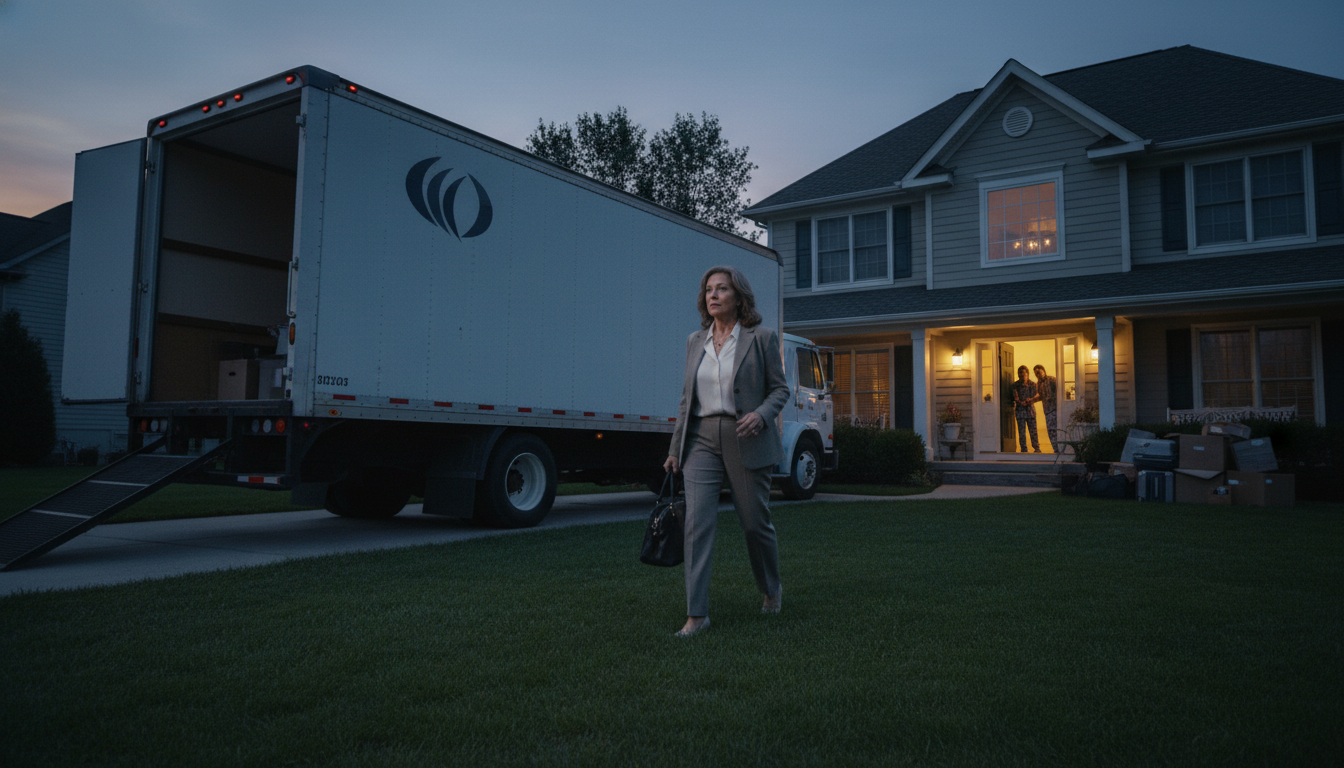
The moving truck arriving at dawn.
Rearranging my kitchen.
Passive-aggressive comments during dinner.
The way she “accidentally” donated my late mother’s cookbook.
Every time I complained, Eric acted trapped in the middle.
Neutral.
But neutrality only protects the person causing harm.
And finally… he seemed to understand that.
Diane crossed her arms defensively.
“I’m trying to protect this family.”
I stared at her in disbelief.
“You threw away my dead mother’s cookbook.”
“It was falling apart.”
“It was handwritten.”
That stopped her for a moment.
Because suddenly even she realized how awful she sounded.
That cookbook was the last thing my mother gave me before cancer took her.
Handwritten recipes.
Food stains from holidays.
Tiny notes scribbled beside ingredients.
Eric likes extra cinnamon.
Save this pie recipe for future grandbabies.
Future grandbabies.
The memory hurt so deeply I had to steady myself against the dresser.
Diane noticed.
And somehow still continued.
“You should’ve told us before the wedding.”
I looked directly at her.
“Told you what? That my body struggles? That life doesn’t always work out fairly?”
She said nothing.
Cruel people rarely expect pain to answer calmly.
Then Eric looked at me differently.
Not with pity.
Recognition.
Like he was finally seeing the past month clearly for the first time.
“Oh my God,” he whispered.
I looked exhausted.
“What?”
“She’s been trying to replace you.”
Diane scoffed immediately.
“That’s ridiculous.”
But it wasn’t ridiculous.
It suddenly felt obvious.
The criticism.
The disrespect.
The constant undermining.
She wasn’t trying to help our marriage.
She was trying to remove me from it.
Especially after learning biological grandchildren might never happen.
Some people from older generations wrap cruelty inside “family values.”
And infertility becomes an excuse to treat women like damaged objects.
Eric looked sick now.
“Mom… did you seriously think humiliating my wife would fix anything?”
Diane’s face cracked slightly.
“I just want grandchildren.”
There it was.
The real truth beneath all the control.
Fear.
Fear disguised as entitlement.
Fear powerful enough to destroy relationships without even noticing.
I spoke quietly.
“You think I don’t want them too?”
Silence filled the room again.
Different this time.
Because grief sounds different when spoken honestly.
Diane looked away first.
Not guilty enough.
But uncomfortable enough.
And honestly?
That was more humanity than she’d shown me since arriving.
Eric exhaled slowly.
“No,” he said firmly.
“No more.”
Diane frowned.
“What does that mean?”
“It means you’re leaving.”
Her face went pale.
“You can’t be serious.”
“This is our home,” Eric said calmly. “And you’ve spent weeks making my wife feel unwanted in her own life.”
“She turned you against me.”
Eric laughed bitterly.
“No. You did that yourself.”
That sentence ended everything.
Three days later, Diane moved into a senior condo across town.
The silence afterward felt strange.
Like surviving a hurricane and suddenly hearing birds outside again.
One evening while reorganizing the bedroom, Eric found me crying quietly over my missing cookbook.
Without saying anything, he disappeared into the garage.
Twenty minutes later he returned carrying a dusty storage box.
Inside were loose recipe cards.
Folded handwritten notes.
Old stained index pages.
Apparently Diane had thrown the cookbook into storage instead of the trash.
I cried so hard I couldn’t breathe.
Eric sat beside me carefully.
“I should’ve protected you sooner.”
Yes.
He should have.
But healing sometimes begins the moment someone finally stops pretending the damage was small.
Months later, we started fertility counseling again.
Not because of pressure.
Not because of Diane.
Because we wanted to.
Together.
And one rainy Sunday morning, while making pancakes using my mother’s recovered recipe cards, Eric wrapped his arms around me and whispered softly:
“You already are a real family.”
Simple words.
But after everything…
They felt enormous.