A woman is dealing with financial stress at home while trying to support her family. She works as a teacher and is also taking care of two children. Her husband lost his job about five months ago, and since then, the household income has become tight. She has been working hard to manage bills, parenting responsibilities, and daily expenses.
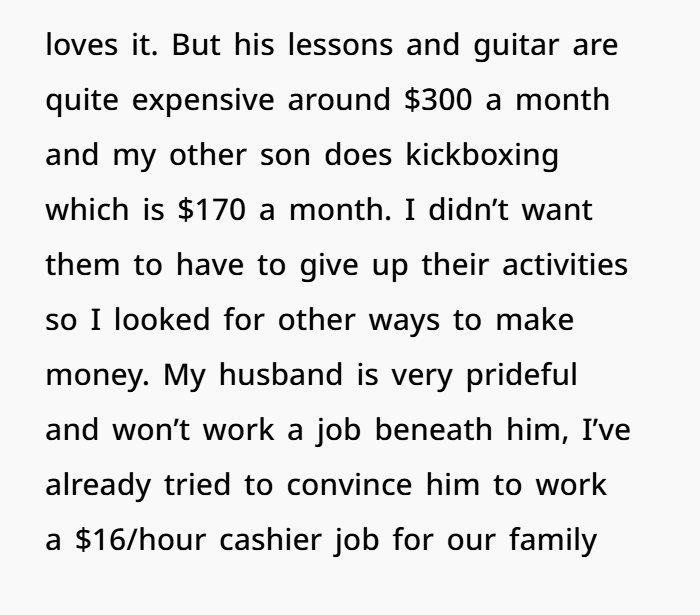
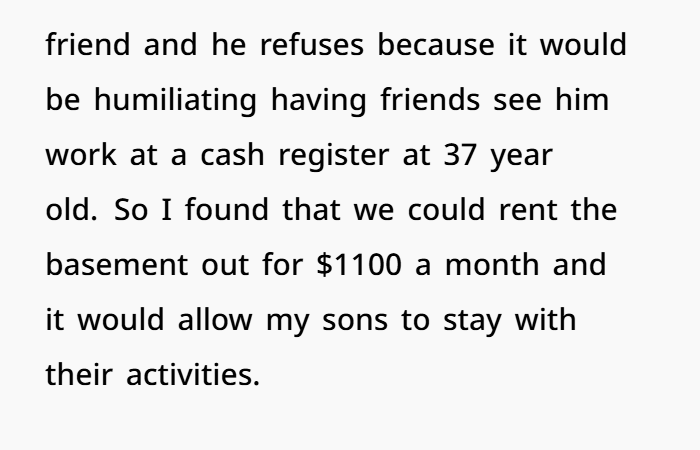
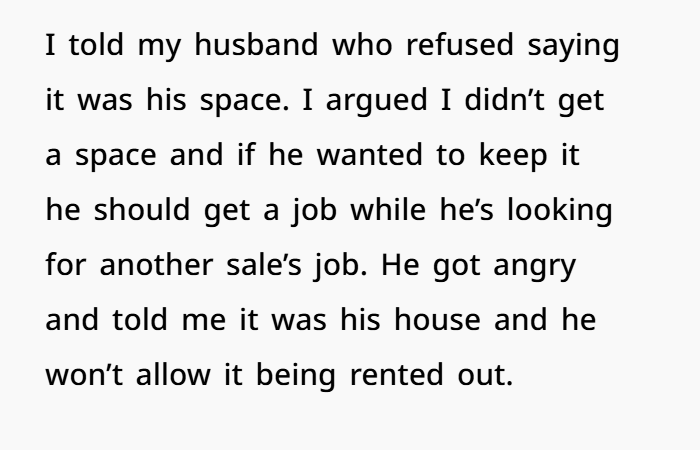
The problem is that her husband is refusing to take any new job unless it matches his previous sales position. At the same time, he insists on keeping his large “man cave” in the basement, which is fully set up like a private apartment. The space could realistically be rented out and bring in extra income, but he does not want to change it or give it up.
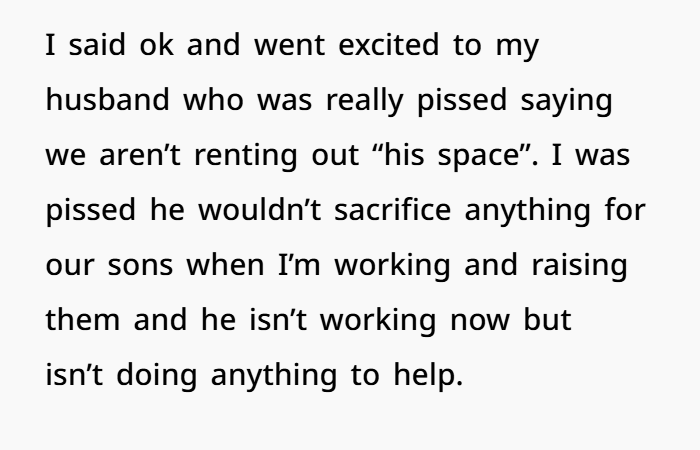
Because of rising costs, including school and extracurricular activities for their children, the woman decided to take action. She listed the basement for rent and found a responsible student tenant. This decision was meant to support the family’s financial stability and help with monthly expenses.
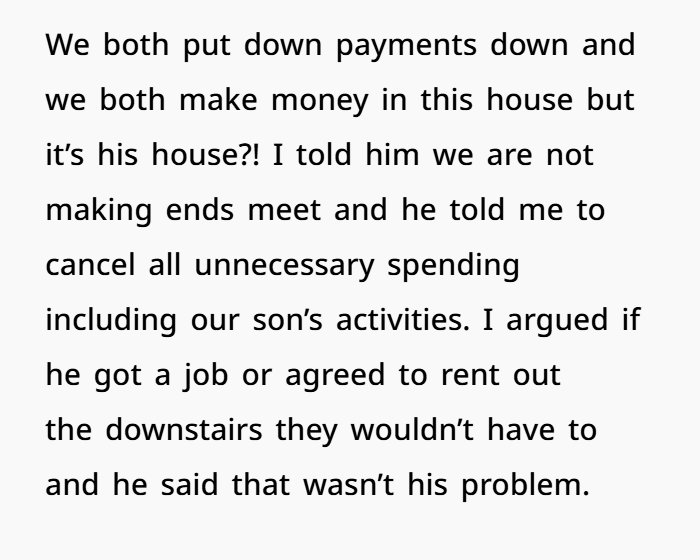
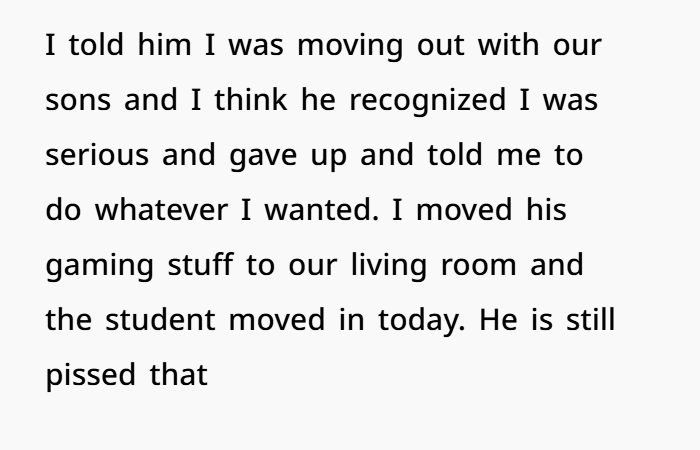
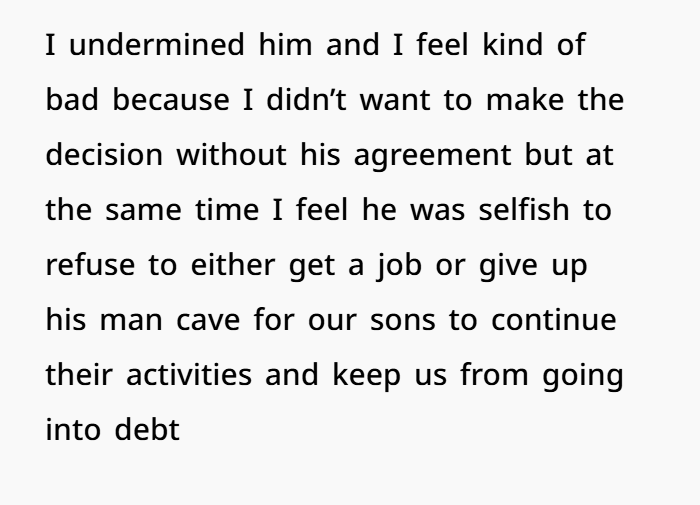
Her husband became very upset and said the basement is his personal space. He also told her to cut back on the children’s activities instead of renting it out. She still went ahead, moved his gaming items upstairs, and allowed the tenant to move in. Now there is tension in the marriage, and she is questioning whether she did the right thing or went too far while trying to manage family budgeting, household expenses, and financial responsibility.
The wife had grown fed up with his irresponsibility as a husband and father, pushing her to rent out his precious space

Let’s be honest—this situation is not just about a basement room. It is about money problems, responsibility, and a partner who is not helping when the family needs support.
💰 Financial Responsibility in Marriage
Marriage is supposed to be teamwork. When one partner is struggling, the other should step in and help. Right now, OP is working full-time as a teacher, which is already a stressful and low-paying job in many places. On top of that, she is also taking care of the house and children.
Her husband has been unemployed for five months. He refuses to take any temporary or lower-paying job because he feels it is “below him.” But in real life, financial stability is more important than pride.
Kids’ activities like sports and music lessons are not just hobbies. They help with learning, confidence, and mental health. Cutting them off because of money problems makes things harder for the children.
Reports from labor data sources like the U.S. Bureau of Labor Statistics show that long-term unemployment often lasts around five months or more. At this stage, most families look for any legal job or temporary income to stay stable.
🕹️ “Man Cave” and Shared Property Issues
Now let’s talk about the basement.
It is not just a small room. It is a full setup with a bedroom, bathroom, and kitchen area. In real estate terms, this is almost like a separate rental unit. Renting it out could bring in important rental income to support the family budget.
But the problem is that the husband is treating it like his private gaming space. He is refusing to allow it to be rented, even though the family is struggling financially.
Since the house is jointly owned in marriage, both partners usually have equal rights. In most cases of marital property ownership, one partner cannot make decisions alone unless there is a legal agreement.
So OP was not doing anything illegal by wanting to use the space to help the family income.
🧒 Why Children’s Activities Are Important
The children are involved in healthy activities like guitar lessons and kickboxing. These are not just hobbies—they support child development.
Studies in child development and family mental health research show that extracurricular activities improve confidence, discipline, and school performance.
Removing these activities just to protect a gaming room sends a negative message to children. It can make them feel like their needs do not matter as much as an adult’s comfort.
For many families, keeping kids in sports and music is a priority even during financial hardship because of the long-term benefits.
💥 Taking Action or Breaking Trust?
Some people may say OP made a big decision without full agreement. In a normal situation, that could be a problem in a marriage.
But here, OP tried many times to find solutions. She suggested work options, talked about finances, and waited for months. Her husband still refused to help or change anything.
At some point, when one partner refuses to act, the other is left to protect the family. This is not about control—it is about financial survival and household financial management.
When someone refuses to help during a crisis, the other partner often has to step in and make hard decisions.
📉 Lack of Responsibility in the Household
This situation is not only about money. It is also about effort and responsibility.
The husband is not working, not helping much at home, and spending most of his time in the basement. This creates an unfair balance where one partner does everything while the other avoids responsibility.
In many family studies, this kind of behavior is seen as a warning sign of unhealthy relationship dynamics, especially when one person carries all the financial and emotional load.
When a partner depends completely on the other without contributing, it creates long-term stress and resentment.
🔍 Real-Life Situations Like This
Many similar stories appear in online relationship forums where one partner refuses to work during financial stress, while the other handles everything alone.
Family counselors often say that when one partner refuses to compromise, the other may have to take practical steps to protect the home and children.
In situations involving household financial stress, experts usually recommend finding any legal income source, even temporary or part-time, to keep the family stable.
OP’s decision to rent out the space was based on real financial pressure, not emotion.