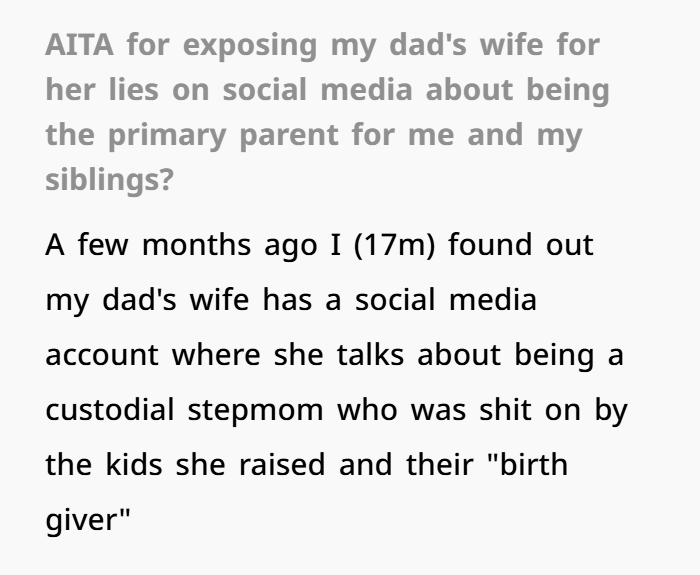
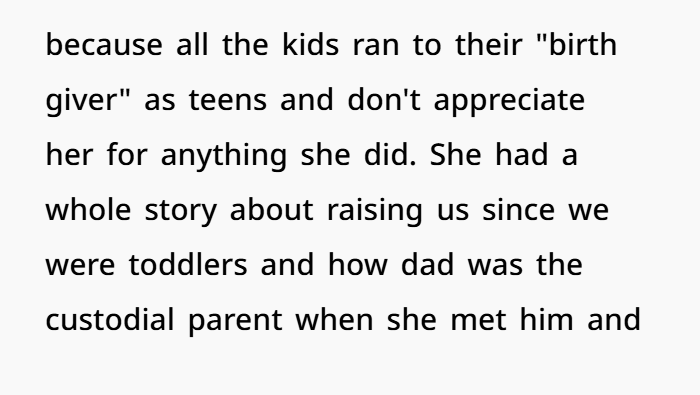
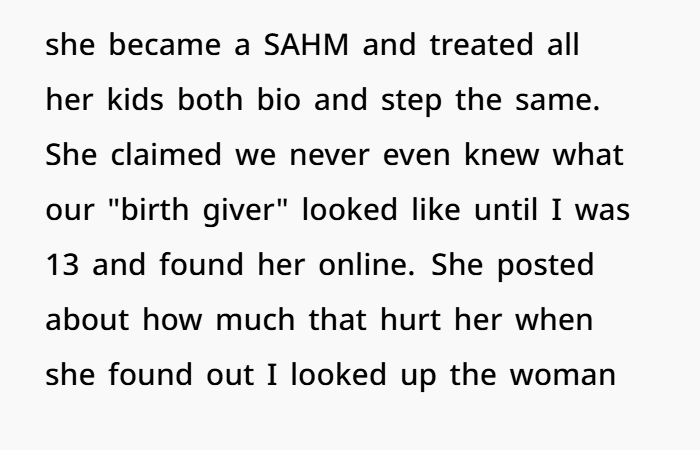
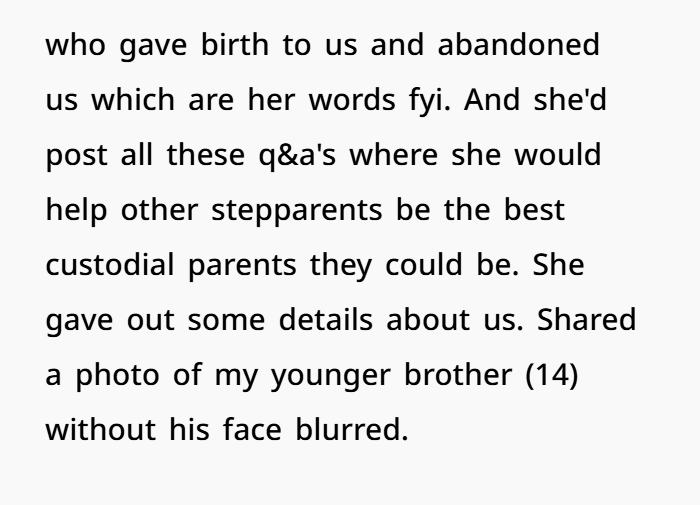
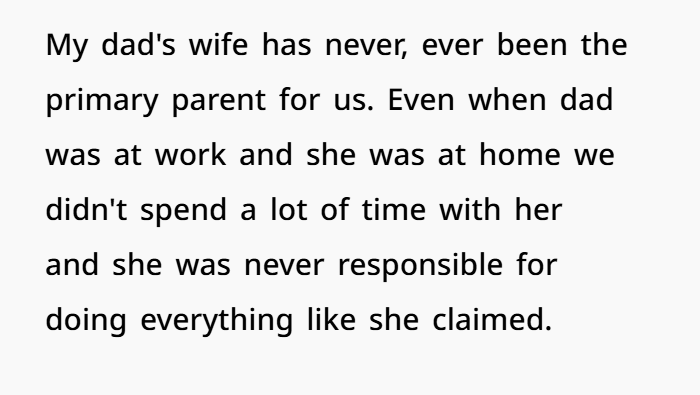
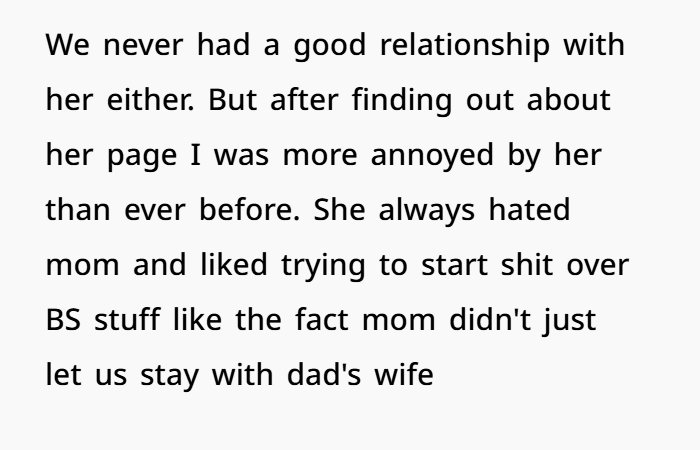
A 17-year-old boy discovered that his stepmother has a public social media account where she talks about him and his siblings in a way he believes is not true. In her posts, she describes herself as the main parent who has raised them since they were very young. She also refers to their biological mother in a negative way and shares personal details about family life.
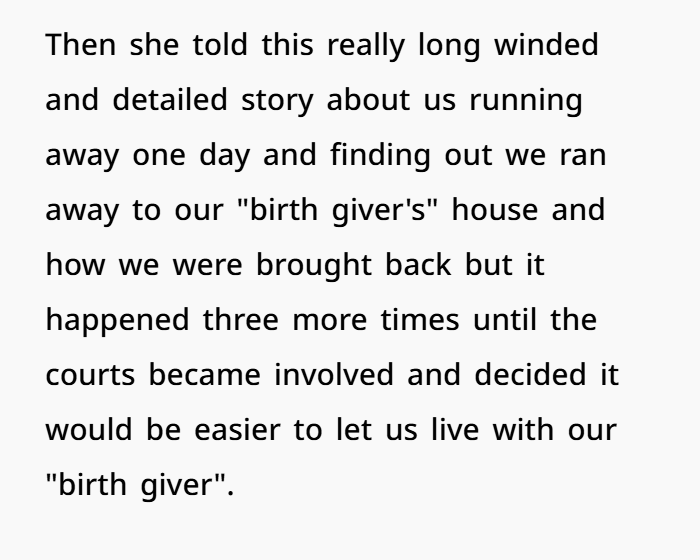
She posts photos of the children, including his 14-year-old brother, without hiding their faces. She also shares her version of custody history, saying she was the primary caregiver and that there were serious custody problems, including claims that the children ran away and that court cases were involved.
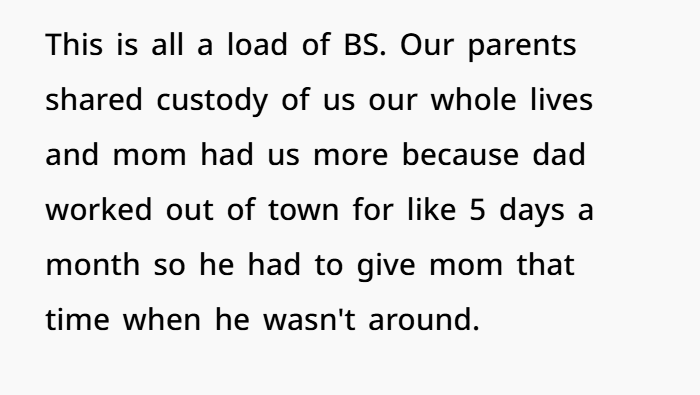
The boy says this is not accurate. He explains that their parents had shared custody and that both parents were involved in their lives. He does not believe the stepmother was the main parent, and he feels uncomfortable with how she is presenting their family online.
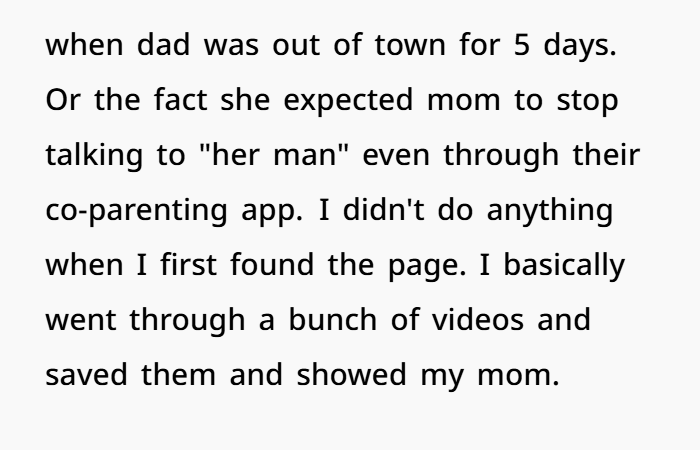
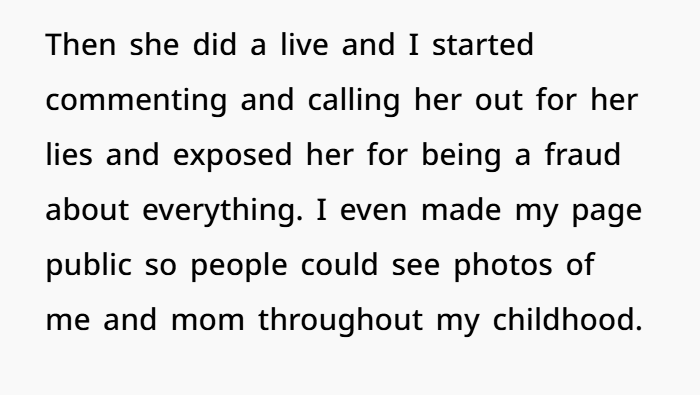
After finding the account, he saved screenshots and showed them to his mother. During a live video from the stepmother, he commented publicly and called out what he believed were false claims. He also made his social media account public so others could see his side of the story.
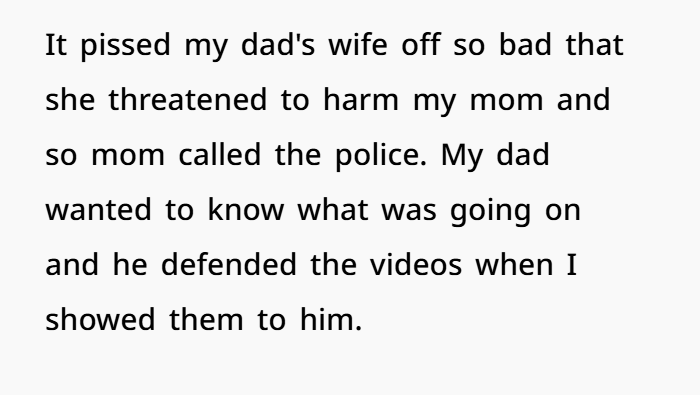
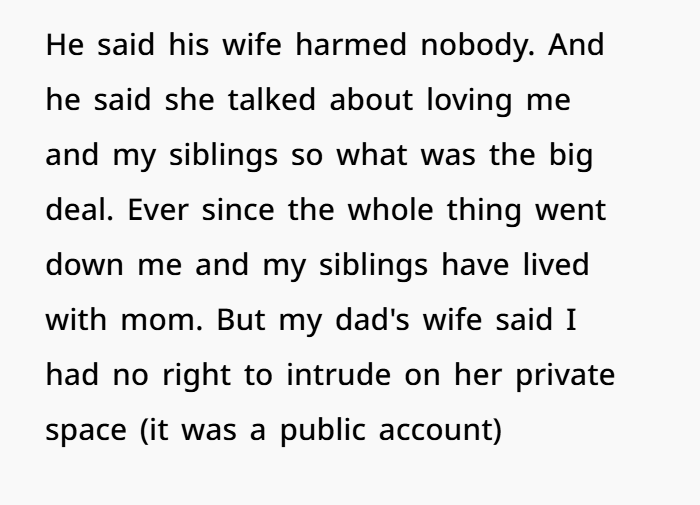
This led to a serious conflict between the families. The stepmother became very angry and threatened their mother. The father defended his wife, saying she cares about the children and that nothing is wrong. However, the situation escalated, and the children eventually moved to live full-time with their mother.
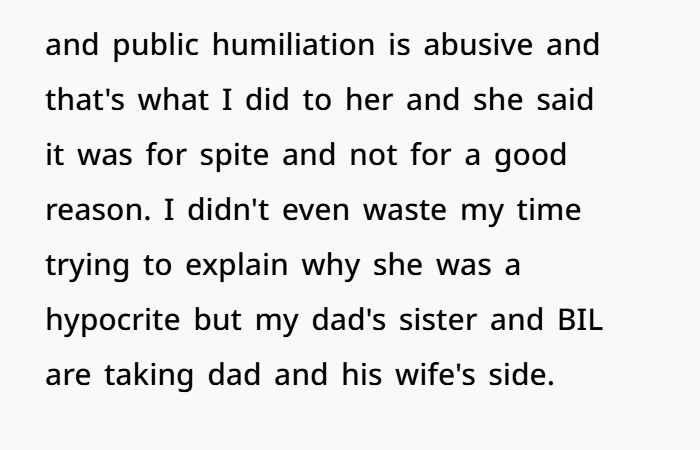
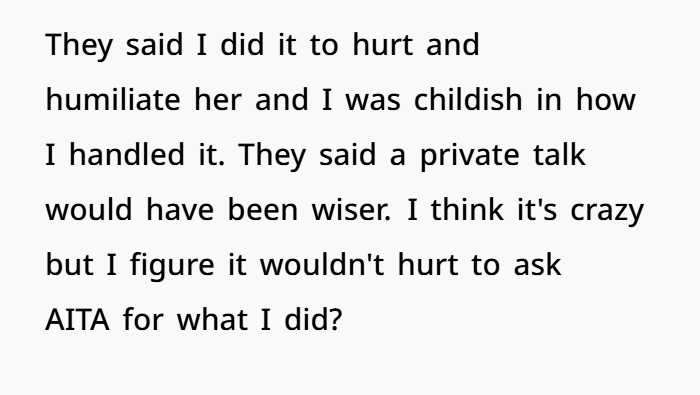
Now the boy’s father’s side of the family says he should have handled it privately instead of publicly exposing the stepmother online. They believe he embarrassed her. He is now asking if he was wrong for speaking out and challenging the situation, especially in terms of online privacy, family conflict, and social media boundaries.
As did this woman, whose stepson exposed her during one of her lives
Understanding step-parent conflict and social media disputes in blended families
This situation is not just about a family disagreement. It also involves blended family dynamics, emotional conflict, step-parent roles, and the use of social media in family disputes. When a step-parent shares a version of a family story that feels false or misleading, it can create serious emotional tension.
1. Step-parent relationships and emotional impact
Living in a blended family is often complicated. There can be a step-mom, step-siblings, biological parents, and different households involved. In this case, the step-mom shared a public story saying she “raised the children since they were toddlers” and suggested that the biological mother was not involved.
This kind of blended family communication can cause pain because it does not match the children’s real experience. It can feel like their life story is being rewritten online.
When step-parents share a version of events that feels inaccurate, it can:
- Create confusion in family relationships
- Hurt the biological parent’s reputation
- Make children feel ignored or misrepresented
- Increase conflict between parents and step-parents
In blended families, trust and truth are very important for emotional stability.
2. Ethical question: Was it right to respond publicly?
This situation also raises an important question about social media behavior: is it okay to correct someone publicly online?
There are two sides to this issue.
Why the response may feel justified:
- The step-mom shared a public version of the family story
- The content may have included false or misleading information
- The post affected both the children and their biological mother
- You had evidence that the story was not accurate
- You were trying to protect your family’s truth
In many blended family situations, people feel the need to defend their real-life experience when it is misrepresented online.
Why some may see it as too harsh:
- A private conversation was not tried first
- Public comments can feel like public shaming
- It may increase family tension and conflict
- It can damage long-term relationships in the household
From an ethical point of view, the intention may be understandable, but the method can still be seen as too public or emotionally intense.
3. Social media and legal concerns
Sharing family stories on social media can create legal and privacy risks. Topics like online defamation, privacy rights, and social media reputation management are important here.
In general:
- Posting false information about someone can lead to defamation concerns
- Sharing private family details publicly can raise privacy issues
- Online disputes can sometimes lead to emotional distress claims
- Truth is usually a key factor in protecting yourself legally
If someone posts a public story, others often feel they have the right to respond. However, even true information should be shared carefully to avoid escalation or legal risk.
Social media platforms do not always control these conflicts, so users are responsible for what they post and how it affects others.
4. Overall situation: Was it wrong?
This situation is not black and white.
Why your reaction makes sense:
- You felt your family’s reality was misrepresented
- Your siblings and mother were also affected
- The post may have influenced how others see your family
- You wanted to correct false information
Where it may have gone too far:
- Public exposure can feel like humiliation to the other person
- It may have increased conflict instead of resolving it
- A private discussion was not attempted first
So the situation is mixed. Your feelings and reasons are understandable, especially in blended family conflict and step-parent disputes, but the approach may have been too public.
5. What can be done next
To reduce conflict and protect family relationships, a few steps can help:
- Ask for correction or removal of incorrect posts
- Try calm communication with the step-parent if possible
- Talk to the biological parent about boundaries and respect
- Protect children’s privacy, especially photos and personal details
- Focus on reducing online conflict and improving family communication
In blended family counseling and family conflict resolution, the goal is usually to reduce tension and rebuild trust over time.
Final thoughts
Blended families can be emotionally complex, especially when social media is involved. When family stories are shared publicly, it can lead to misunderstandings, hurt feelings, and long-term conflict.
Your reaction came from feeling that your family’s truth was not being respected. That feeling is valid. At the same time, how issues are handled online matters, because it can affect relationships, privacy, and future communication.
In situations like this, the best outcome usually comes from balancing truth, calm communication, and careful use of social media.